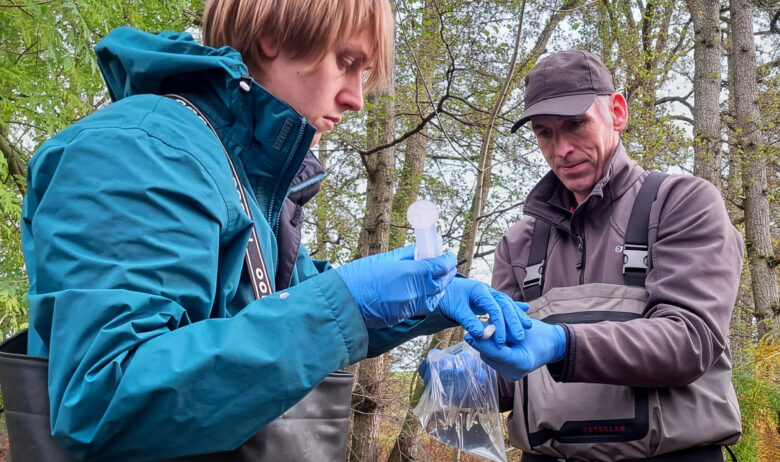
99 water samples were collected from 19 watercourses, covering approximately 66 km of habitat.
White-clawed crayfish were detected at two locations, reaffirming their continued presence in these small becks, although none were recorded in three becks where previously there were reported populations, requiring further investigation.
Water vole, an endangered species in the UK, was detected at five watercourses, including some previously unrecorded locations. On the nine watercourses where water voles had previously been recorded but eDNA was not found on this occasion, six tested positive for mink eDNA.
American mink, a non-native, invasive predator posing a serious threat to water voles and other native wildlife, was detected at nine watercourses, prompting immediate action with nine new mink traps deployed.
Overall, 27% of samples were positive for at least one target species, with detections recorded across 63% of surveyed watercourses.