Skip To Content
Logo

Bank the Balsam

28/04/2026

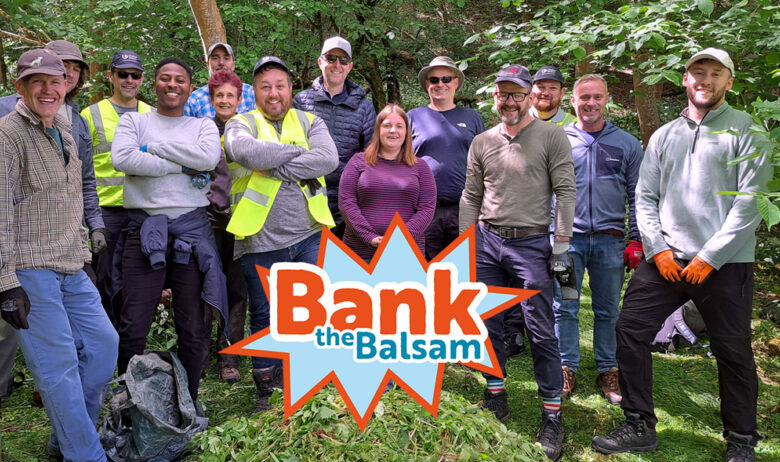
Himalayan Balsam bashing season is officially OPEN and we're calling on communities from across the Eden river catchment to join our annual blitz to remove this invasive non-native species (INNS) from our riverbanks.

We've organised events throughout the summer months and across the Eden catchment with efforts kicking off this Bank Holiday Monday 4th May from 2pm to 4pm at Dalston near Carlisle. This event is the first of three falling on Bank Holiday weekends and we'll need a big turnout to get our balsam bashing efforts off to a flying start. 

Jenni Payne, Community Engagement and Volunteer Coordinator said:

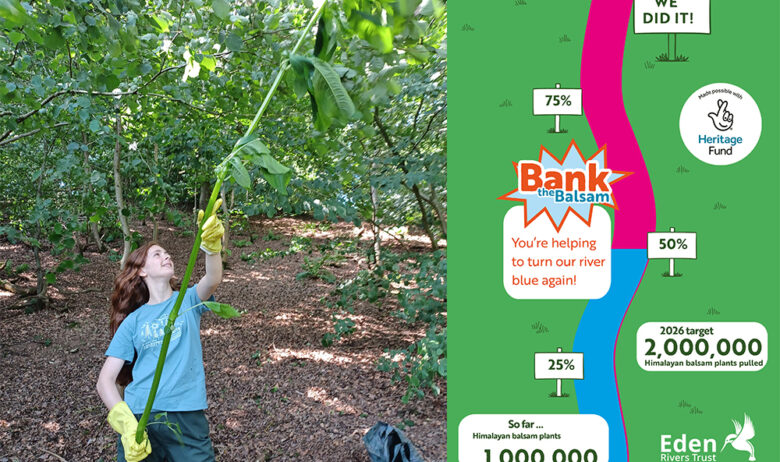
“Balsam season is upon us and our Himalayan balsam bank is empty! Help us fill it up this year by removing this invasive, non-native plant from our riverbanks, paths and fields. 

“Do come along and join us in Dalston this Bank Holiday Monday, it’s always a lot of fun and everybody can join in. It’s simple to remove these shallow rooted invaders and add them to our ‘Balsam Bank’! We’ll be laying on plenty of tea and cake to keep you motivated! 

“With your help, we hope to remove and deposit 500,000 plants into our ‘balsam bank’ this year, giving much needed space to our native plants to help them re-establish themselves along Eden’s riverbanks.”

There are two ways you can get involved this summer:
This year’s activities have been organised as part of our ‘Action Against Invasives’, from the Access to Eden: breaking barriers, building bridges partnership project led by Eden Rivers Trust with a grant from The National Lottery Heritage Fund.

More Information about invasive non-native species

Non-native species are plants, animals, fungi, and micro-organisms that have been brought over to the UK from all over the world and are now thriving in areas where they don’t naturally occur.

Most are harmless, but around 15% spread and become invasive non-native species (INNS). If unmanaged, invasives can cause damage to wildlife, the environment and our economy and can even impact our health and way of life. INNS cost the UK economy around £1.8 billion every year through damage and erosion.

Visit the INNS section of our website to find out how to identify species, how to report them, steps you can take to reduce their spread and events and activities in your area.