Wildlife and landscape of this hidden gem near Kirkby Stephen

Thacka Beck Nature Reserve
A haven for wildlife in Penrith



Wildlife and landscape of this hidden gem near Kirkby Stephen

Running along the valley floor is Scandal Beck, a tributary of the River Eden. Rising on the north‑western slopes of Wild Boar Fell, above the striking Stennerskeugh Clouds, the beck flows north through Smardale before joining the Eden near Soulby.
This seemingly quiet stream is internationally important for wildlife, providing habitat for native white‑clawed crayfish, river lamprey, and salmon.

Approaching the beck, keep your eyes open for dippers bobbing on the stones and grey wagtails along the water’s edge. In the summer, you may also spot green sandpipers, greenshanks, wheatears, redstarts, and pied flycatchers.
The plant life is equally rich. Look for fragrant lady’s bedstraw, wild thyme, delicate harebells, quaking grass, and the colourful monkey flower in the beck.
Ravenstonedale is also a stronghold for red squirrels, although they face continual pressure from invading grey squirrels.

As the magnificent Smardale Gill Viaduct comes into view, the sense of stepping into a “lost valley” becomes clear. Smardale is a rare refuge—bursting with wildlife that has vanished from many other places, and full of visible traces of human history.
The flora here is exceptional, supporting a rich community of insects. Butterflies thrive in summer, and in July and August you’re likely to see common hawker and golden‑banded dragonflies, as well as common blue damselflies dancing above the grasses.
Back in 2020/21, we undertook a large tree planting project here to create more valuable habitat for wildlife and help slow the flow of water and reduce run-off from the steep fell sides into this small beck to help protect water quality and flatten out the flood peak downstream.

Scandal Beck currently supports a healthy population of White‑clawed crayfish, our only native species. But their future is fragile. They are highly vulnerable to crayfish plague, a disease that has devastated populations across England and Wales. The plague is carried by the invasive signal crayfish, an American species that spreads the disease while remaining immune, much like the threat grey squirrels pose to native reds.
Smardale Gill contains some of the finest limestone grassland in East Cumbria, alongside extensive ancient semi-natural woodland. Managed by Cumbria Wildlife Trust, the site was declared a National Nature Reserve in 1997 and now extends for six kilometres along the former railway line.
The grasslands are dominated by blue moor-grass, and in summer they burst into colour with plants such as alpine bistort, bird’s-eye primrose, fragrant and butterfly orchids, melancholy thistle, and bloody cranesbill.
In the shady woodland, you may also discover herb paris, an uncommon plant associated with ancient woodland.
Butterflies of National Importance
Dozens of butterfly species have been recorded here. The standout is the Scotch argus, found in only one other site in England. It lays its eggs on blue moor‑grass, which its caterpillars rely on for food. Other species you might see include:
Traces of the Past
As you walk, the landscape opens up and reveals where you’ve come from—quarries that once supplied stone for the viaduct, and mysterious rectangular mounds on the slopes above.
These mounds, known as pillow-mounds or “giants’ graves”, are actually the remains of medieval rabbit warrens, built by monks as a vital winter food source.
Interpretation panels along the trail share more about the area’s rich flora and the impressive lime kilns that stand above the railway line—two towering reminders of the valley’s industrial past.
Smardale Bridge
As you look up to the hillside ahead, you may notice a series of gentle terraces stepping across the slope. These are ancient cultivation terraces, remnants of an Iron Age settlement that once stood just north of here. If you look carefully, the circular outlines of old hut platforms can still be traced—quiet echoes of a community that lived and farmed here thousands of years ago.
Smardale Bridge itself was once an important stopping point along a well‑used cattle droving route linking Kendal with Kirkby Stephen. Drovers, traders, and travellers passed through regularly, and the bridge became a natural meeting spot, and also was the site of a small inn—the Scotch Ale House.
A haven for wildlife in Penrith

An ancient route in the Mallerstang valley
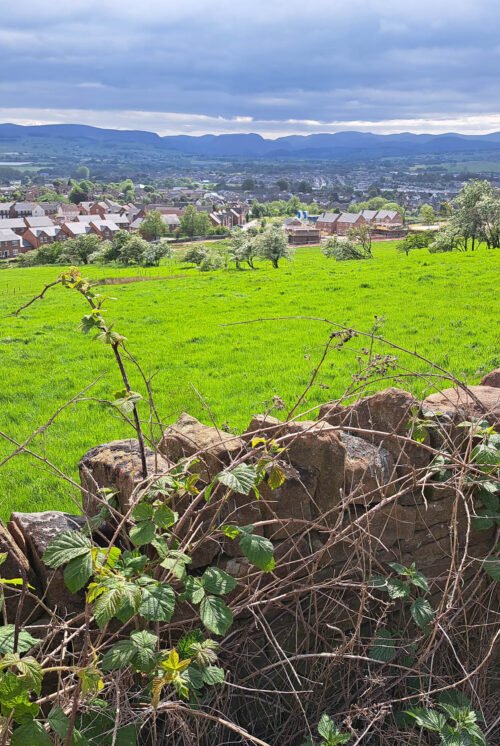
A great place for the people of Penrith to enjoy being in and watching nature.

A place where trees and people can thrive