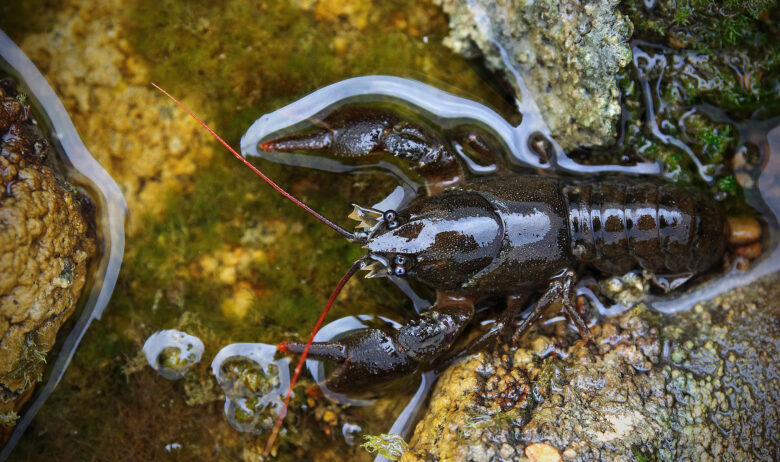
The White-clawed crayfish is the UK’s only native freshwater crayfish and is listed as endangered on the IUCN Red List. The Eden catchment in Cumbria is one of its last strongholds in England, but populations are rapidly declining due to:
- Water pollution – these crayfish can only survive in clean, unpolluted rivers, and
- Invasive American Signal crayfish – these are larger, more aggressive, and are carriers of the deadly crayfish plague. Signal crayfish outcompete and prey on the native species. They can be identified by a pale green-blue or white patch at the hinge of their claws.
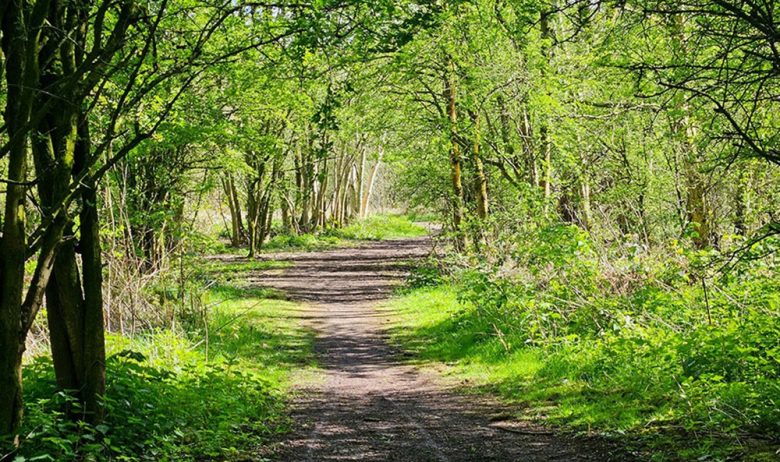
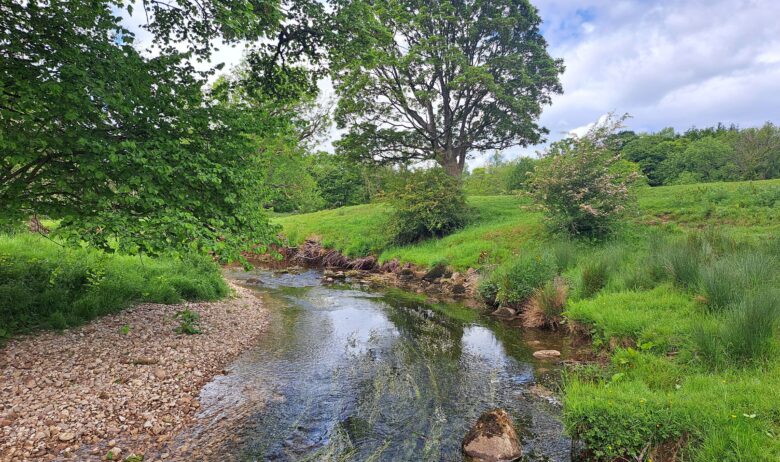
We're leading efforts to locate potential ‘ark sites’ high in the North Pennines fellsides —safe havens where white-clawed crayfish might still thrive, free from invasive species, thanks to support from North Pennines National Landscape via the Farming in Protected Landscapes programme.
To cover the vast network of becks and rivers, we're using innovative survey techniques, including environmental DNA (eDNA) sampling. This method detects traces of DNA shed by animals into the water through blood, poo, fur or skin cells.
This method of sampling doesn’t disturb the river habitat or wildlife as much as traditional survey methods, and is more cost-effective and quicker when sampling large areas such as this.
Stephen Henderson, our Conservation Manager: Habitat and Species, explains how the process works:
“We scoop water into a bag, shake it to mix the DNA, then use a syringe to push it into a tube containing a filter. That filter captures DNA, which we send off for analysis.
If White-clawed crayfish DNA is present, it suggests a population may be nearby.”
Alongside DNA sampling, staff and volunteers also carry out quick habitat surveys to assess the suitability of sites for future conservation or reintroduction efforts. Once we've determined whether there is a potential population in a location, we can conduct more traditional physical surveys to measure the size and health of the population.
We've been using eDNA sampling techniques for a while, and they are not just limited to searching for White-clawed crayfish! We've used this method to test for the presence of American mink, water voles, crayfish plague and American Signal crayfish. As a small charity working in a large river catchment, this means we can effectively cover a wider area and use our resources wisely!
We're sampling over the next week or so, then we will pause for the winter period, as crayfish tend to move less during this time. We will then start again in March 2026, so if you're interested in helping us with sampling in the spring, please get in touch with us at [email protected] to register your interest.